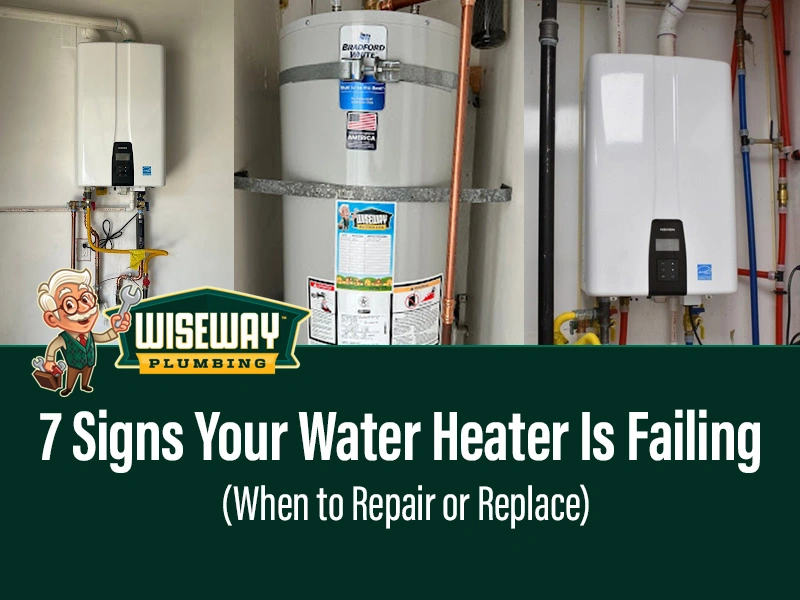
If your shower suddenly turns cold, your water looks rusty, or your water heater starts making strange noises, those aren’t random issues—they’re warning signs.
In Torrance and across the South Bay, water heaters tend to wear out faster than many homeowners expect. Mineral-heavy water, daily demand, and aging systems all take a toll. The good news? Most systems give you clear signals before they fail completely.
Knowing what to look for can help you avoid emergency breakdowns, water damage, and unnecessary expenses.
Quick Summary: Signs Your Water Heater Is Failing
- Inconsistent or no hot water
- Rusty or discolored water
- Popping or banging noises
- Water pooling around the unit
- Airflow or pilot issues
- Visible corrosion on connections
- System age over 8–10 years
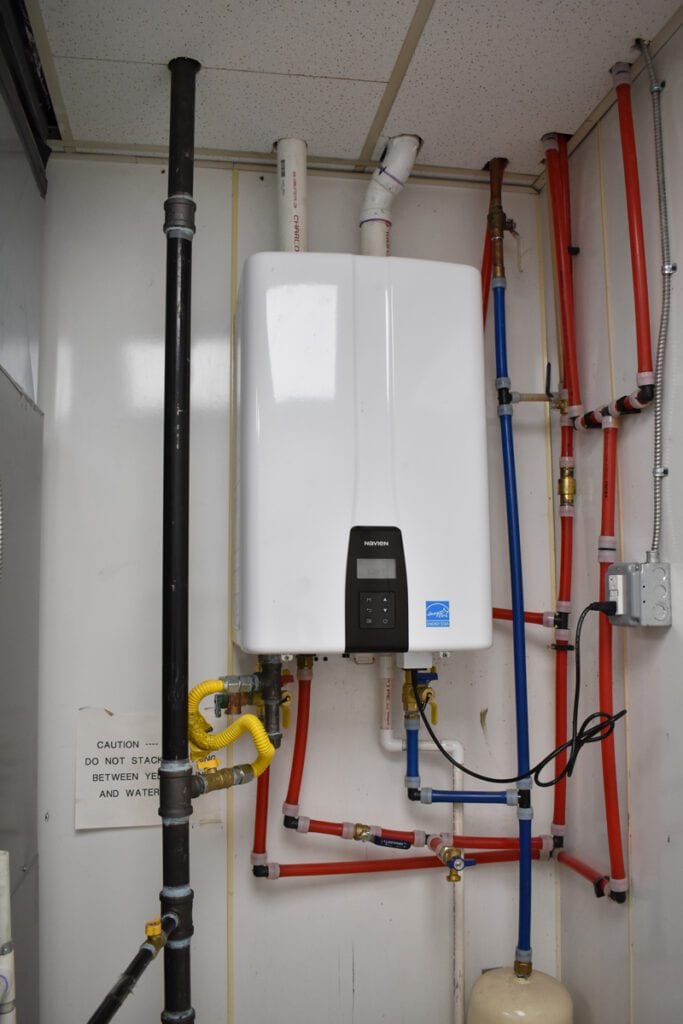
1. Inconsistent or No Hot Water (Common Water Heater Repair Issue)
If your hot water runs out quickly or fluctuates in temperature, something inside the system isn’t working properly.
Common causes include:
- Failing heating elements
- Thermostat issues
- Gas control valve problems
- Sediment buildup in tank systems
- Scale buildup in tankless heat exchangers
In South Bay homes, hard water accelerates mineral buildup, which reduces efficiency and forces your system to work harder than it should.
2. Rusty or Brown Water from Your Water Heater
If your cold water runs clear but your hot water looks brown or rusty, that’s a strong sign of internal corrosion.
This typically means:
- The anode rod has failed
- The inside of the tank has started rusting
Once corrosion reaches the tank itself, replacement is usually the only option.
3. Popping or Banging Noises Coming from the Tank
Unusual noises are often caused by hardened sediment at the bottom of the tank.
Here’s what’s happening:
- Minerals settle and form a layer
- Heat gets trapped beneath the sediment
- The system overheats and makes popping sounds
This doesn’t just create noise—it increases energy costs and shortens the life of your system.
4. Water Heater Leaking or Pooling Around the Base
Any moisture around your water heater should be taken seriously.
Possible causes include:
- Loose fittings
- Pressure relief valve discharge
- Condensation
- Drain valve leaks
- Internal tank fracture
If water is coming from the tank itself, repair is not an option—replacement is required.
5. Airflow or Combustion Issues (Gas Units)
Modern sealed combustion systems rely on proper airflow to operate safely.
In many Torrance and South Bay homes, we see:
- Dust, lint, and pet hair clogging intake screens
- Restricted airflow causing pilot outages
- Flame instability or shutdowns
Maintaining at least 2 feet of clearance and cleaning intake areas regularly can prevent these issues.
6. Age: When Your Water Heater Reaches 8–10 Years
Most tank water heaters last:
- 8–10 years in typical South Bay conditions
- Occasionally up to 12 years with excellent maintenance
If your system is over 10 years old and showing symptoms, replacement is usually the smarter long-term decision.
7. Corrosion on Flex Lines and Water Connections
Take a close look at the connections at the top of your unit.
Watch for:
- Rust or corrosion at fittings
- Bulging supply lines
- Mineral buildup
- Slow drips
We see this often in older homes throughout Torrance, Redondo Beach, and Carson. These small issues can turn into major leaks if ignored.
Tank vs. Tankless Water Heater Problems
Both systems fail—but in different ways.
Tank Water Heaters
- Internal corrosion
- Sediment buildup
- Tank leaks
- Heating element failure
Tankless Water Heaters
- Scale buildup in heat exchangers
- Ignition or sensor issues
- Flow-related shutdowns
Routine maintenance is especially important for tankless systems in hard water areas like the South Bay.
Water Heater Repair vs Replacement: What’s the Right Call?
This is one of the most common questions we get.
Repair Makes Sense If:
- The unit is under 8 years old
- The issue is isolated (thermostat, element, valve)
- There is no visible corrosion or tank damage
Choose Replacement If:
- The tank is leaking
- Rust is present in the water
- The system is over 10 years old
- Multiple components are failing
In many cases, repair can become a short-term fix on an aging system. Replacement often improves efficiency, reliability, and long-term cost savings.
Water Heater Repair vs Replacement Cost in South Bay
While costs vary, here’s a general breakdown:
- Typical Repairs: $150 – $800
- Tank Replacement: $1,500 – $3,500+
- Tankless Installation: $3,000 – $6,500+
Factors that affect cost:
- Type of system
- Installation complexity
- Code upgrades
- Water quality and scaling
How to Extend the Life of Your Water Heater
A little maintenance goes a long way.
We recommend:
- Annual flushing to remove sediment
- Anode rod replacement every 3–5 years
- Installing a water conditioning system
- Inspecting flex lines and fittings yearly
- Using leak detection devices
In our experience, proactive maintenance can significantly extend system life—even in mineral-heavy areas.
Frequently Asked Questions
What are the first signs a water heater is failing?
Inconsistent hot water, rust-colored water, unusual noises, leaks, or reduced performance are usually the first indicators.
Does hard water affect water heaters in the South Bay?
Yes. Mineral buildup reduces efficiency, increases wear, and shortens system lifespan.
Can flushing a water heater extend its life?
Can flushing a water heater extend its life?
Can a leaking water heater be repaired?
If the leak is coming from the tank itself, replacement is required.
Need Water Heater Repair or Replacement in Torrance, Palos Verdes, or the South Bay?
If you’re noticing any of these warning signs, don’t wait for a complete failure.
A quick inspection now can prevent water damage, higher costs, and unexpected downtime.
WiseWay Plumbing provides honest, no-pressure evaluations for homeowners throughout Torrance, Redondo Beach, Manhattan Beach, and the greater South Bay—so you can make the right decision with confidence.
(310) 731-1055