
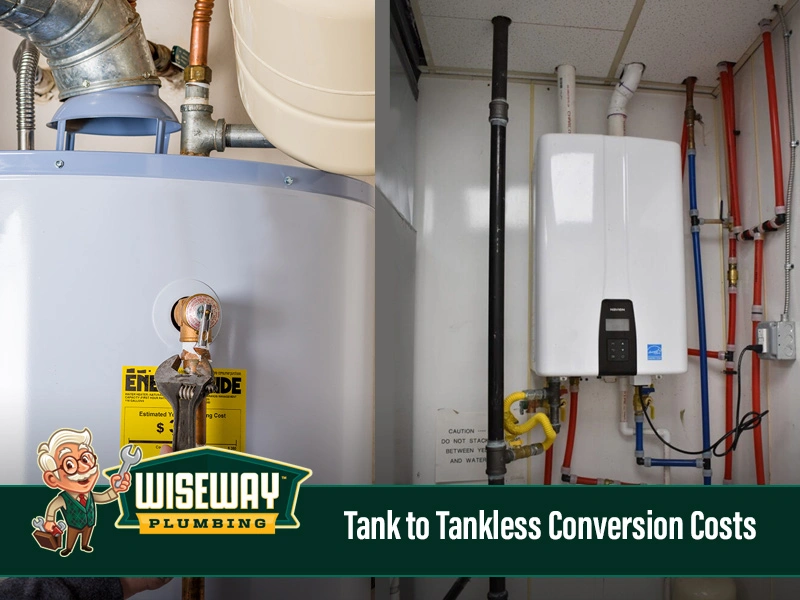
If you’re researching tank to tankless conversion costs, you’re probably wondering whether the upgrade is worth the investment. Replacing traditional tank water heaters with a modern tankless system can deliver long-term savings, improved energy efficiency, and better use of space — but the total installation cost depends on several important factors.

At Wiseway Plumbing, we provide a $0 estimate with install coupon, so you can review pricing and options before making a decision.
Call to schedule your free estimate!
(310) 731-1055What Affects Tank to Tankless Conversion Costs?
The cost of converting from a tank water heater to a tankless model isn’t just about swapping one unit for another. In most homes, some level of retrofit work is required.
Here are the primary factors that influence pricing:
1. Type of Tankless Model
(Gas vs. Electric)
- Electric tankless models typically have a lower upfront equipment cost, but may require electrical panel upgrades.
- Gas-powered systems often cost more to install due to venting and gas line modifications, but they usually offer better long-term energy savings for larger households.
The right option depends on your home’s layout, energy usage, and budget.
2. Pipe & Plumbing Modifications
Older homes often need pipe adjustments, upgraded water lines, or rerouting to accommodate the new system.
In some cases, additional materials are required to ensure proper water pressure and safe operation. These modifications can affect the overall installation cost.
3. Venting & Gas Line Upgrades
Gas tankless systems may require:
- New venting materials
- Larger gas supply lines
- Updated shut-off valves
These upgrades are common in Southern California homes that were originally designed for standard tank water heaters.
4. Space & Location
One of the biggest advantages of tankless systems is the space savings. They mount on a wall and eliminate the bulky tank.
However, relocating the system (garage to exterior wall, interior to attic, etc.) can add labor and materials to the estimate.
Is the Upfront Investment Worth It?
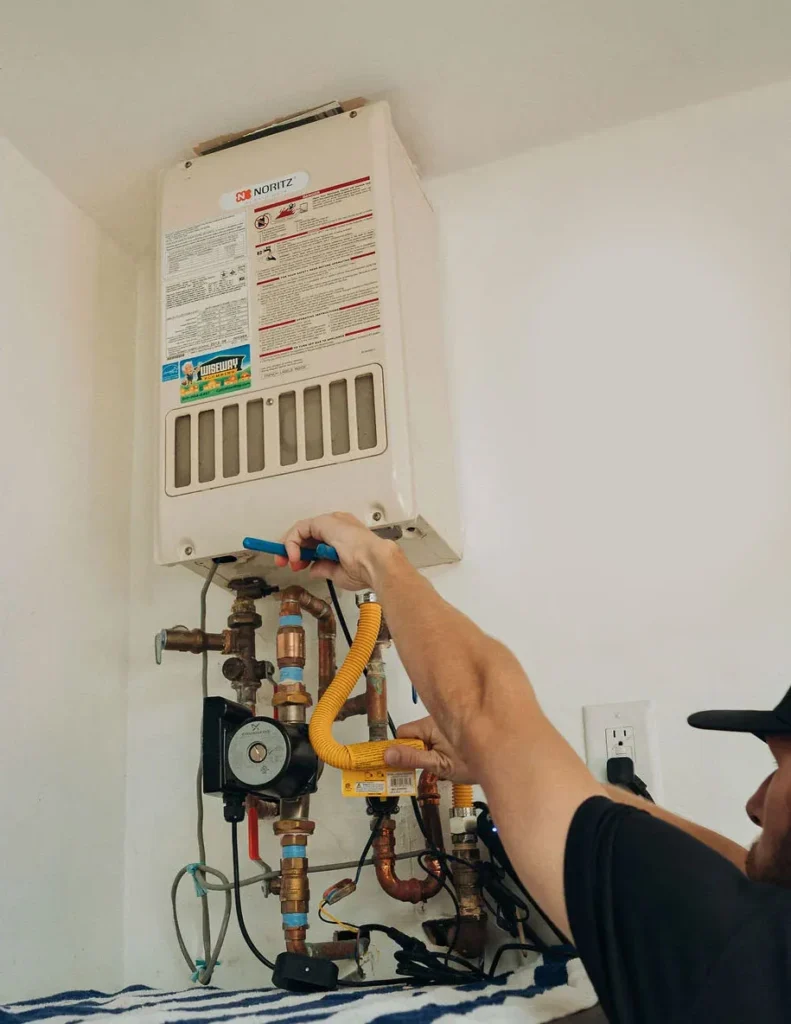
The upfront investment is higher than simply replacing a tank water heater — but many homeowners see long-term value in:
- Lower monthly utility bills
- Increased energy efficiency
- Endless hot water
- Extended warranty coverage (many tankless models carry longer warranties than traditional tanks)
- Longer system lifespan
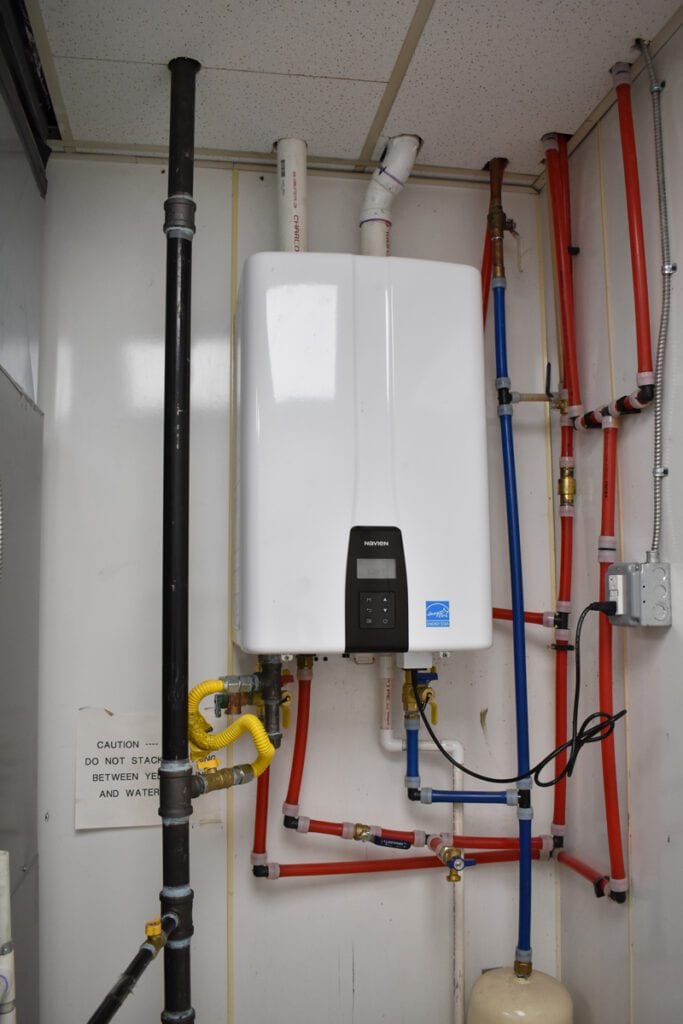
When you compare tank water heaters vs. tankless in terms of durability and energy savings, the numbers often favor tankless — especially for families who use a lot of hot water.

Average Tank to Tankless Conversion Pricing
While every home is different, most tank to tankless conversions in Southern California range between:
- Lower range: Minimal retrofit, electric model
- Mid-range: Gas system with moderate modifications
- Higher range: Extensive upgrades, relocation, or panel improvements
The number of upgrades needed directly impacts the final quote.
That’s why we always recommend a professional in-home estimate instead of guessing from an online pricing menu.
Pros and Considerations Before Converting
Here’s a quick comparison to help with your decision:
Pros:
- Significant energy efficiency improvements
- Lower standby heat loss
- Space savings
- Longer lifespan
- Potential long-term savings
Considerations:
- Higher upfront installation cost
- Possible electrical or gas modifications
- May require pipe retrofit
A professional assessment helps clarify which option provides the best value for your home.
20-Year Cost Comparison Overview
Over a 20-year period:
– Traditional Tank: Likely 2 replacements
– Properly Installed Tankless: 1 replacement
– Improperly Installed Tankless: 2–3 replacements plus service issues
When installed correctly, tankless systems often provide lower long-term ownership costs, improved energy efficiency, and greater reliability.
Get a $0 Estimate on Your Tankless Conversion
Because so many factors affect tank to tankless conversion costs, the only accurate way to determine pricing is with an on-site evaluation.
Wiseway Plumbing offers:
- ✔ $0 estimate with install coupon
- ✔ Transparent pricing
- ✔ Help comparing models
- ✔ Clear breakdown of materials and labor
- ✔ No-pressure recommendations
We’ll review your current system, explain your options, and provide a detailed quote so you can make a confident decision.
(310) 731-1055How Much Does It Cost to Convert a Tank to a Tankless Water Heater?
Converting from a traditional tank water heater to a tankless system in Torrance and the South Bay typically costs $5,500 to $9,500+, depending on gas line requirements, installation location, venting changes, home size, and optional upgrades like recirculation systems.
While the upfront cost is higher than replacing a tank, tankless systems:
– Last 15–20 years (compared to 8–12 years for tanks)
– Eliminate standby energy loss
– Reduce monthly gas usage
– Provide endless hot water
– Help prevent emergency tank failures and water damage
Over time, many homeowners see energy savings and extended replacement cycles, meaning you may replace one tankless unit in the time you would have replaced two traditional tanks.
What Factors Affect Tankless Retrofit Pricing?
Retrofit pricing depends on heater location, gas line capacity, venting configuration, home size, BTU requirements, and optional upgrades such as recirculation systems.
Does the Current Water Heater Location Matter?
Yes. The location of your existing tank heater impacts labor, venting requirements, and gas modifications. Garage conversions, outdoor closets, and indoor-to-outdoor relocations all carry different pricing variables.
Will My Gas Line Need to Be Upgraded?
Gas sizing must be physically evaluated on-site. Not every home requires a full gas line replacement. Traditional tanks use approximately 35,000–40,000 BTUs, while tankless systems may require 160,000–199,000 BTUs.
Some modern high-efficiency tankless units are capable of operating on a properly sized ½-inch gas line, depending on pipe length, total connected load, and meter capacity. Proper measurement and load calculation are essential to determine if upgrades are required.
How Long Does a Properly Installed Tankless Water Heater Last?
A professionally installed and properly maintained tankless water heater typically lasts 15–20 years. Proper gas pressure, correct venting, annual flushing, and accurate sizing all contribute to extended lifespan.
Traditional tank heaters typically last 8–12 years.
How Long Does an Improperly Installed Tankless System Last?
Improperly installed tankless systems may fail within 3–8 years due to undersized gas lines, improper venting, lack of scale management, or incorrect system sizing. Many premature failures stem from installation errors rather than equipment defects.