
What Most Installers Won’t Tell You
— and What to Do About It
If you’ve been searching for answers about a tankless water heater that stopped working, started throwing error codes, or is simply performing worse every year — you’re asking the right questions. With over 20 years servicing tankless systems across Torrance, Palos Verdes, and the broader South Bay area, WiseWay Plumbing has a fairly clear picture of why these units fail. Spoiler: it’s rarely the heater itself.
About nine out of ten tankless water heater failures we diagnose trace back to how the unit was set up — or how it hasn’t been cared for since. The hardware from brands like Navien, Noritz, and Rinnai is genuinely well-engineered. Designed for 15–20+ years of reliable service, these systems can deliver on that promise — but only under the right conditions.
The Product Quality Is There. The Installation Quality Isn’t.
Navien, Noritz, and Rinnai dominate the residential tankless market for good reason. Their condensing and non-condensing units are rigorously tested, their error code diagnostics are thorough, and their heat exchangers are built to handle serious thermal cycling. So when a Navien NPE or a Rinnai RUR fails at year four, the manufacturer usually isn’t to blame.
The South Bay is full of homes where tankless heaters were installed by contractors who understood the concept but missed the details.
Gas load calculations skipped. Vent runs cobbled together with incompatible materials. No isolation valves. These aren’t rare edge cases — they’re what we find on the majority of service calls involving early-onset failures.
Gas Line Sizing: The Most Common — and Most Damaging — Mistake
A standard 40-gallon tank water heater draws somewhere in the range of 36,000–40,000 BTUs. A modern condensing tankless unit can demand 199,000 BTUs or more at full modulation. That’s not a minor increase; it’s a fundamentally different gas supply requirement.
When a contractor installs a high-demand tankless system on a gas line sized for the previous tank heater, the unit runs starved. The pressure differential at the gas valve causes unstable combustion, inconsistent ignition, and a flame that the system continuously tries to correct. Over time, this torches the igniter, degrades the heat exchanger, and generates a cascade of error codes — the kind that look like unit defects but are actually symptoms of a supply problem.
Proper sizing involves calculating total connected load across the home, measuring static and dynamic pressure at the meter, factoring in pipe diameter and run length, and confirming that the final BTU delivery meets the appliance’s minimum operating threshold. That’s not optional math — it’s the foundation of a functional install.
Venting Failures: Slow-Building, Hard-to-Diagnose
Condensing tankless heaters produce flue gases that drop significantly in temperature by the time they exit the heat exchanger. That’s what makes them efficient. It’s also what makes incorrect venting so destructive.
PVC and CPVC vent materials work on condensing units precisely because the exhaust temperatures are low enough. Use them on a non-condensing unit, or mix material types across a run, and you’re looking at thermal degradation that can cause combustion gas intrusion, carbon monoxide concerns, and voided warranties. On the intake side, an undersized combustion air calculation means the unit runs in a negative pressure environment — burning dirty, cycling erratically, and wearing components well ahead of schedule.
Vent slope matters too. Condensate that puddles in a horizontal run instead of draining toward the unit will ice up in winter (yes, even in South Bay), corrode aluminum vent components, and eventually block airflow entirely.
Hard Water in South Bay: What Scale Actually Does to a Heat Exchanger
The South Bay draws from municipal water sources with measurable hardness — typically in the range of 150–300+ mg/L as calcium carbonate, depending on location and seasonal variation. That mineral content doesn’t disappear when water enters your plumbing system. It precipitates out when water is heated, and in a tankless unit, it deposits directly onto the heat exchanger walls.
Scale is an insulator. As it builds, the heat exchanger has to work harder to transfer the same amount of energy into the water stream. Outlet temperatures become inconsistent. The unit runs longer at higher flame intensity to compensate. Eventually, the exchanger overheats, the thermal fuse triggers, and the unit locks out.
Annual descaling — circulating a dilute food-grade acid solution through the heat exchanger circuit — dissolves that buildup before it reaches critical thickness. In high-hardness areas, some installations benefit from upstream water softening or a dedicated scale inhibitor, though those solutions come with their own considerations and maintenance requirements.
How to Assess Whether Your Current Tankless Was Installed Correctly
You don’t need to be a plumber to do a basic sanity check on your installation. A few observable details tell you a lot:
- Isolation valves with flush ports should be visible on both the cold inlet and hot outlet lines. If the unit is plumbed directly into the supply lines with no service valves, descaling is effectively impossible without significant disruption.
- On a condensing unit, a condensate drain line should run from the bottom of the unit to a nearby floor drain or neutralizer box. If there’s no drain line, the condensate is going somewhere it shouldn’t.
- The vent run should use a single consistent material type rated for the unit (check the installation manual for your specific model). Mixed materials — PVC transitioning to flex aluminum, for example — are a red flag.
- Ask your installer (or the previous owner) for combustion analysis records from the time of install. If they don’t exist, the commissioning step was likely skipped.
People Also Ask
Why did my tankless water heater stop working after only 3 years?
Early failure at the 3–5 year mark is almost always installation-related — undersized gas line, incorrect vent configuration, missing components, or some combination of the three. Hard water without maintenance accelerates the timeline further. A diagnostic service call will identify whether the root cause is an installation deficiency or accumulated scale damage, which determines whether repair or reinstallation is the better path forward.
Do tankless water heaters really need yearly maintenance in Southern California?
Yes — and the South Bay specifically warrants it. Municipal water hardness in this area, combined with the high thermal demand placed on heat exchangers in year-round mild weather (people run hot water constantly), creates real-world scale accumulation rates that show up on annual service visits. Skipping a year is a gamble; skipping several is close to a certainty of expensive repairs.
Can a tankless water heater be repaired, or does it need to be replaced?
It depends heavily on what failed and why. Heat exchanger replacements are expensive but sometimes worthwhile on a well-installed unit that simply needs maintenance catch-up. If the unit was improperly installed from the start, repairing individual components without addressing the underlying installation issues tends to produce diminishing returns. We always assess the installation quality alongside the component failure before recommending a repair-vs-replace path.
What error codes mean on a Navien, Noritz, or Rinnai unit?
Error codes are a starting point for diagnosis, not a conclusion. A Navien E003 (ignition failure) could indicate a faulty igniter, a gas supply problem, a venting issue, or a blocked condensate trap — depending on the installation and maintenance history. Rinnai’s 11 code (no ignition) follows similar logic. We always interpret error codes in the context of the full system, not in isolation.
Is hard water the reason my tankless water heater is losing efficiency?
Very likely, if you’re in South Bay and the unit hasn’t been serviced recently. Scale on the heat exchanger walls reduces thermal transfer efficiency measurably, which forces the unit to run harder and longer for the same output. You’ll often notice it as longer wait times for hot water, slightly lower output temperatures, or increased gas usage before the unit starts throwing error codes.
The Low-Bid Problem — and Why Expensive Doesn’t Always Mean Correct
Tankless water heater installation bids in Southern California can swing wildly. A rock-bottom quote that comes in hundreds below competitors almost always reflects one of two things: skipped components or skipped calculations. The gas line math takes time. Pulling permits takes time. Installing isolation valves and condensate neutralizers costs money. Contractors who skip those steps can legitimately charge less — and the homeowner won’t notice the difference until year two or three.
What surprises some homeowners is that the problem isn’t limited to the cheapest bids. A high-invoice installation from a busy general contractor who subcontracted the plumbing to an under-supervised crew can have exactly the same deficiencies as the low-bid job. The invoice isn’t the proof of quality. The commissioning documentation is.
A properly completed tankless installation should include recorded gas pressure readings (static and dynamic), documented vent material and run length calculations, a combustion analysis result, and a written maintenance schedule. If none of that was provided at the time of installation, those records don’t exist.
Realistic Lifespan Expectations for Tankless Systems in South Bay
A tankless water heater that was correctly sized, properly installed, and maintained on schedule in a South Bay home can realistically last 15–20 years. Some units hit 20+ with nothing more than annual service and a heat exchanger cleaning every few years.
The degraded scenarios look quite different. Improper installations in average water conditions tend to fail or require major repairs at the 5–7 year mark — usually a heat exchanger or gas valve replacement. Units in high-hardness water with no maintenance history frequently need intervention at 3–5 years. Neither outcome is inevitable; both are preventable.
Tankless Water Heater Repair & Installation Across the South Bay
WiseWay Plumbing handles tankless water heater repair, installation, and annual maintenance throughout Torrance, Redondo Beach, Manhattan Beach, Hermosa Beach, Palos Verdes, and neighboring South Bay communities. Whether you’re troubleshooting an existing unit or planning a new installation, we’re happy to walk through the specifics with you — no obligation.
Call or Email WiseWay Plumbing to schedule a diagnostic visit or installation consultation.
Booking Online Is Easy!
More Expert Plumbing Advice

Missing Tankless Water Heater Components Aren’t Cosmetic Omissions
Isolation valves with integrated service ports aren’t an upsell — they’re what make annual descaling possible without shutting down the entire domestic water system. Leave them out, and maintenance becomes disruptive enough that most homeowners skip it. Skip maintenance in South Bay’s hard water environment for a few years, and the heat exchanger fills with calcium scale.
Condensate neutralizers are required by code in most installations involving condensing units, and for good reason: untreated condensate from a high-efficiency gas appliance is mildly acidic. Running it directly into cast iron drain lines accelerates corrosion. This isn’t a theoretical concern — we see it.
Pressure relief valves, expansion tanks on closed systems, and proper cold water inlet shut-offs round out the list of components that installers sometimes leave out in the interest of time or margin. Each one exists for a specific reason. None of them are negotiable on a code-compliant installation.
Get a Professional Opinion on Your Tankless Water Heater Install.
Schedule a Consultation with Wiseway Plumbing!
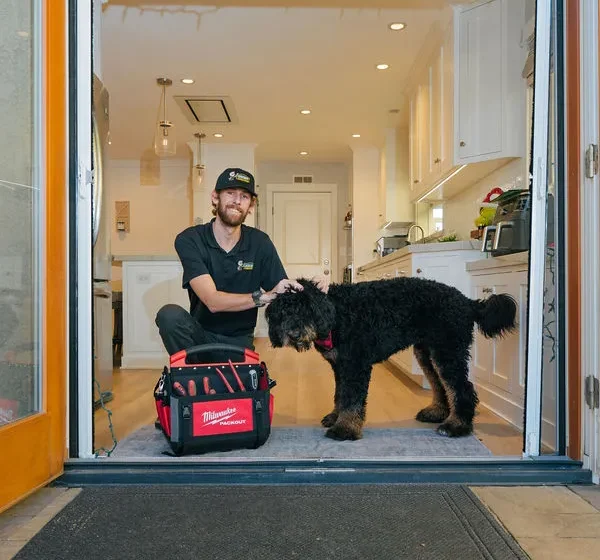
The Three-Year Failure Arc
There’s a recognizable pattern in South Bay tankless water heater repair calls: the unit performed well in year one, started showing intermittent issues in year two — fluctuating water temperature, the occasional error code, a slight loss of hot water volume — and by year three, it shuts down or requires a major repair.
This isn’t coincidence. It’s the timeline of accumulated damage from improper installation. A marginally undersized gas line or a slightly imprecise vent run won’t kill a unit immediately. It degrades components gradually. The heat exchanger runs hotter than it should. The gas valve modulates against inconsistent supply pressure. The condensate path backs up slowly. By year three, the system has absorbed enough stress that something fails — often the heat exchanger or ignition assembly, both expensive repairs on any brand.
Why Annual Maintenance Isn’t Optional in This Climate
Every major tankless water heater manufacturer specifies annual maintenance as a condition of warranty coverage. That’s not marketing language — it reflects what the engineering teams know about how these units accumulate wear in real-world conditions.
A proper annual service visit on a tankless unit covers more than a descale cycle. It includes combustion analysis to verify the air-fuel ratio is within spec, flame sensor cleaning (carbon deposits on the sensor cause misfire errors), gas inlet pressure verification under both static and flowing conditions, vent inspection for blockages or material degradation, and a check of the isolation valve operation and condensate drain path. On Navien units specifically, the secondary heat exchanger and condensate trap deserve close attention; they’re common failure points when maintenance lapses.
In South Bay homes with water hardness at the higher end of the range, twice-yearly descaling is worth considering. The incremental cost is trivial compared to a heat exchanger replacement.