
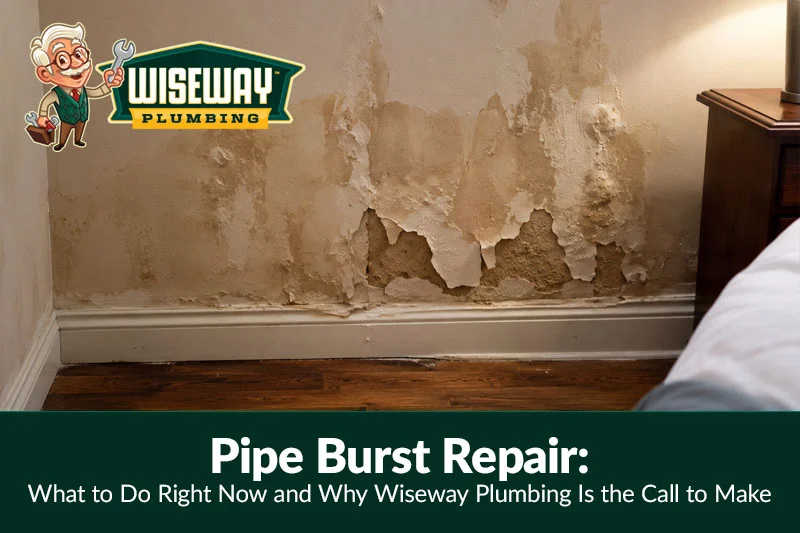
Water running when nothing’s turned on. A floor that’s soaked for no obvious reason. A burst pipe rarely announces itself ahead of time — it just happens, and suddenly you’re standing in it, trying to figure out what comes next.
What you do in the next few minutes shapes how bad this actually gets. So does who picks up the phone. Wiseway Plumbing has been handling pipe burst repair across Torrance, Rolling Hills Estates, and the rest of the South Bay for 27 years, and this guide covers what causes a pipe to fail, how to respond immediately, what the repair itself involves, and when one burst pipe is really a warning about the whole system.
Why Pipes Burst
A pipe rarely fails for no reason. Five causes account for nearly every case:
- Corrosion. Mid-century homes often still run on their original galvanized steel, which rusts from the inside out until the wall gives way. Copper holds up longer but isn’t immune — pinhole leaks develop over time, especially where the water chemistry is aggressive.
- Pressure surges. Municipal supply pressure fluctuates more than most homeowners realize. Without a functioning pressure-regulating valve, your plumbing absorbs every spike untouched.
- Root intrusion. Tree roots chase moisture, and older clay or cast iron sewer lines give them plenty of cracks to exploit. Once a root gets in, it widens the opening from inside until the pipe fails.
- Ground movement. Between seismic activity and Southern California’s drought-to-downpour soil cycles, underground joints take more stress than people assume.
- Cold snaps. Freezing is uncommon here, but pipes tucked into crawl spaces or thin exterior walls can still burst if a cold night catches them exposed.
A house past the 40-year mark with its original plumbing intact isn’t just unlucky when a pipe gives out — it may be overdue.
The First 15 Minutes
Every minute of delay adds to the cleanup. Here’s the order that limits the damage:
- Find the main shutoff and turn it clockwise until it stops. It’s usually near the water meter, at the front of the house, or in the garage. If it’s stiff or corroded, don’t force it past the point of breaking — do what you can safely, then get someone on the phone.
- Crack open a faucet — a hose bib works fine — to bleed off residual pressure and let the lines drain.
- Clear the area. Water moves faster than you’d expect, sliding under baseboards and flooring before it’s visibly obvious how far it’s gone, so get valuables and electronics out of its path.
- Take photos and video before you clean anything up. Your insurer will ask for this, and having it ready shortens the claims process considerably.
Two things not to do: don’t flip switches or touch outlets anywhere near standing water, and don’t rely on a hardware-store patch as anything more than a stopgap. A repair done right the first time costs less than fixing a masked problem twice.
Once the water’s off and you’ve got your documentation, make the call.
What Actually Happens During the Repair
Water doesn’t always surface where the pipe actually failed. It travels — through wall cavities, under flooring, along the framing — so locating the break is often the first real task, not fixing it. Wiseway Plumbing relies on professional leak detection to find that point without opening up walls that don’t need it.
From there, the fix depends on the pipe’s material, its location, and how far the damage extends:
- Section replacement handles most cases: cut out the failed piece, install new material, often wrapped up in a few hours.
- Coupling repair works when the break is small and the rest of the line is sound.
- Slab leaks are a Southern California staple, since many homes route water lines beneath the concrete foundation. Reaching one might mean breaking through the slab, rerouting through the walls, or using trenchless techniques — Wiseway lays out the options before any work starts.
- Underground line breaks, whether water or sewer, can sometimes be fixed trenchlessly, sparing your yard a full excavation.
Occasionally a burst pipe uncovers deterioration well beyond the immediate break. When that happens, a repiping conversation isn’t a sales tactic — it’s just honest math. Patching one section of failing 50-year-old galvanized pipe while the rest stays in place tends to buy you a few months, not a solution.
When It’s More Than Bad Luck
A single burst can be exactly that: isolated, unlucky, done. But a few other signs suggest the whole system is aging out:
- Water pressure that’s dropped everywhere, not just at one sink — usually corrosion narrowing pipes throughout the house
- Rust-tinted water, particularly first thing in the morning, pointing to active corrosion
- Several small or pinhole leaks showing up within months of each other, suggesting the material itself is the problem
- Original plumbing that’s crossed the 40-year mark without ever being replaced
Standing moisture doesn’t stay harmless for long — mold can start forming inside walls or under flooring within a day or two. If the leak went unnoticed for a stretch, it’s worth bringing in a water damage restoration specialist alongside the plumbing repair. And if this isn’t your first pipe failure in the same house, that’s usually the point where repiping becomes worth a serious look.
Why South Bay Homeowners Call Wiseway Plumbing
Nearly three decades in this area means the team has already seen the failure modes specific to it: galvanized systems aging out in Carson and Bellflower, slab leaks tied to mid-century Torrance construction, pressure quirks and shifting clay soil around Rolling Hills Estates. That’s not generic plumbing knowledge — it’s built from working these neighborhoods for years.
Being family-owned also changes what happens when you call. There’s no call center rerouting your emergency to whoever’s free. The same people show up, do the work, and stand behind it. And before anything begins, you get a clear picture of what was found, what fixing it involves, and what it’ll cost — no surprises tacked on afterward.
Frequently Asked Questions
How long does a burst pipe repair take?
A simple section replacement might wrap up in a few hours. Slab access, water line replacement, or tracking a leak through walls takes longer. Either way, you’ll get a realistic timeline before the work begins.
Will homeowners insurance cover this?
Typically, yes, for a failure that’s sudden and accidental. What insurers tend to exclude is gradual damage from a leak that sat unaddressed — another reason to document everything right away and notify your insurer promptly.
Can I still run water while I wait for the repair?
Not much, once the main is shut. If the break is isolated to a branch line rather than the main supply, a plumber may be able to restore partial service — worth asking when you call.
I can’t find my main shutoff. Now what?
That happens more than people expect, especially in older homes. The meter shutoff at the street is your backup; you may need a meter key or a flat-head screwdriver to operate it. It’s worth locating both before you actually need them.
Is a burst pipe always obvious?
No — some happen behind walls, beneath slabs, or underground, where the only clues are a spike in your water bill, damp patches on flooring, or the sound of running water when nothing should be on. If something feels off, don’t wait it out.
What to Remember When It Happens
Cut the water, document the damage, steer clear of anything electrical, and get a plumber you trust on the phone — those four moves cover the window that matters most.
Wiseway Plumbing has walked South Bay homeowners and small businesses through this exact scenario for nearly 30 years, handling everything from a quick section repair to slab leaks, failed water lines, and full repiping jobs, with straight answers at every step.
If you’re in it right now, don’t wait it out. And if you’d rather catch a problem before it turns into 2 a.m. flooding, Wiseway also offers plumbing inspections built for exactly that.
Reach out to Wiseway Plumbing for emergency pipe burst repair or to schedule an inspection.
Booking Online Is Easy!
More Expert Plumbing Advice



Fixing Plumbing Problems in The South Bay
and the Surrounding Communities
- 32
- 33
- 34
- 35
- 36
- 37
- 38
- 39
- 40
- 41
- 42
- 43
- 44
- 45
- 46
- 47
- 48
- 49
- 50
- 51
- 52
- 53
- 54
- 55
- 56
- 57
- 58
- 59
- 60
- 61
- 62
- 63
- 64
- 65
- 66
- 67
- 68
- 69
- 70
- 71
- 72
- 73
- 74
- 75
- 76
- 77
- 78
- 79
- 80
- 81
- 82
- 83
- 84
- 85
- 86
- 87
- 88
- 89
- 90
- 91
- 92
- 93
- 94
- 95
- 96
- 97
- 98
- 99
- 100
- 101
- 102
- 103
- 104
- 105
- 106
- 31
- 107
- 108
- 109
- 110
- 111
- 112
- 113
- 114
- 115
- 116
- 117
- 118
- 119
- 120
- 121
- 122
- 123
- 124
- 125
- 126
- 127
- 128
- 129
- 130
- 131
- 132
- 133
- 134
- 135
- 136
- 137
- 138
- 139
- 140
- 141
- 142
- 143
- 144
- 145
- 146
- 147
- 148
- 149
- 150
- 151
- 152
- 153
- 154
- 155
- 156
- 157
- 158
- 159
- 160
- 161
- 162
- 163
- 164
- 165
- 166
- 167
- 168
- 169
- 170
- 171
- 172
- 173
- 174
- 176
- 177
- 178
- 179
- 180
- 181
- 182
- 183
- 184
- 185
- 186
- 188
- 189
- 190
- 191
- 192
- 193
- 194
- 195
- 196
- 197
- 198
- 199
- 200
- 201
- 202
- 203
- 204
- 205
- 206
- 207
- 208
- 209
- 210
- 212
- 213
- 214
- 215
- 216
- 217
- 218
- 219
- 220
- 221
- 222
- 223
- 224
- 225
- 226
- 227
- 228
- 229
- 230
- 231
- 232
- 233
- 234
- 235
- 236
- 237
- 238
- 239
- 240
- 241
- 242
- 243
- 244
- 245
- 246
- 247
- 248
- 249
- 250
- 251
- 252
- 253
- 254
- 255
- 256
- 257
- 258
- 259
- 260
- 261
- 262
- 263
- 264
- 265
- 266
- 267
- 268
- 269
- 270
- 271
- 272
- 273
- 274
- 275
- 276
- 277
- 278
- 279
- 280
- 281
- 282
- 283
- 284
- 285
- 286
- 287
- 288
- 289
Don’t see your ZIP code? Call us to ask about service in your area. We may still be able to help.
(310) 731-1055