
What the T&P Valve Actually Does
Why Replacing the Valve Alone Only Mutes the Alarm
The temperature and pressure relief valve, usually called a T&P valve, is a safety device. It sits on the side or top of your tank and releases water any time internal pressure crosses 150 PSI or temperature climbs past 210 degrees Fahrenheit. Without it, a failing thermostat could turn a water heater into something closer to a steam bomb.
When you see water dripping from the discharge pipe, the valve is reacting to a condition inside your tank. Something is pushing pressure or temperature past the safe limit. The valve opens, lets a small amount out, closes, and the cycle repeats. Replace the valve and you’ve only muted the alarm. The fire is still burning somewhere.
The Real Culprit: Thermal Expansion in a Closed System
How a Closed System Traps Water With Nowhere to Go
Water expands when it heats. A 50 gallon tank heated from the cold inlet temperature up to 120 degrees gains roughly a gallon of volume. In an open system, that extra water pushes backward through the supply line into the city main, where there’s plenty of room. California homes don’t work that way.
Nearly every home built or re-plumbed in the last few decades has a pressure regulator installed where the water line enters the house. That regulator holds a check valve inside it that prevents backflow. Combined with the water meter, which also prevents reverse flow, your home becomes what the industry calls a closed system. Water heats up, expands, has nowhere to escape, and pressure climbs fast. By the time a long shower runs, pressure can hit 150 PSI. The T&P valve opens, drips, closes, and you’re left wondering why the drip tray is always wet.
Signs you’re dealing with thermal expansion rather than a failed valve:
- The drip happens shortly after hot water use, especially long showers or laundry cycles
- A pressure gauge screwed onto a hose bib reads normal at rest but spikes above 100 PSI after heating
- The valve drips consistently, not randomly, and new valves keep failing the same way
- You have a pressure regulator installed, which covers most homes in Los Angeles County
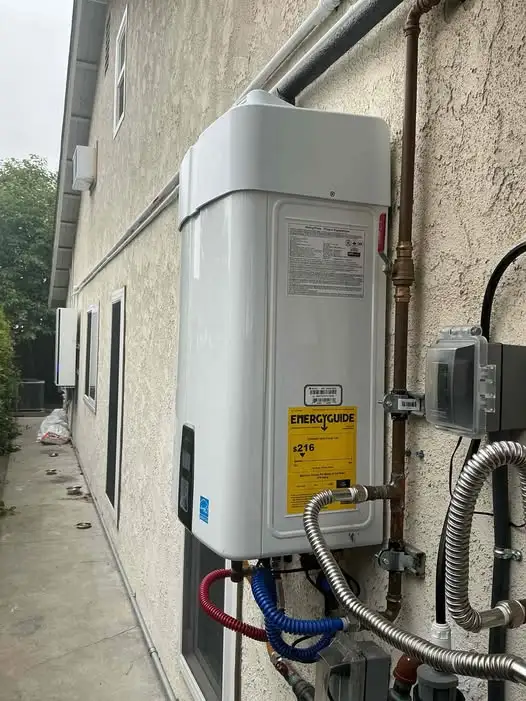
- There’s no thermal expansion tank mounted near the water heater
If three or more of those sound familiar, the valve isn’t your problem.
Why California Homes See This More Than Other Regions
Why High Street Pressure on the Westside and South Bay Makes This Worse
The California Plumbing Code calls for pressure regulators on homes where incoming street pressure exceeds 80 PSI. Across the Westside and South Bay, that includes most of Venice, Culver City, El Segundo, Manhattan Beach, Hermosa Beach, and Palos Verdes. Street pressure in some Peninsula neighborhoods runs above 100 PSI at the meter before it even reaches the regulator.
That same code calls for an expansion tank whenever a closed system exists. Many older water heaters in the area were installed before enforcement caught up, and plenty of newer installations get rushed through without one. If your tank was swapped out by someone cutting corners, there’s a strong chance the expansion tank got skipped. Our team at Wiseway Plumbing finds missing expansion tanks on almost every dripping-valve diagnosis we run across homes in Torrance, Lomita, and Gardena.
When the Valve Really Is the Problem
Relief valves do fail, and the failure usually looks different than thermal expansion.
The drip is steady and happens even when no hot water has been used for hours
Mineral crust has built up around the valve seat where it meets the pipe
The valve lever feels loose, sticks, or won’t seat cleanly after a manual test
The tank is more than eight years old and the valve has never been swapped
In those cases, a valve replacement makes sense. It’s still worth checking expansion and pressure at the same time, because a worn valve on a closed system will fail again inside of a year.
Sediment and Temperature Setting as Secondary Causes
When Thermostat Drift Is the Real Cause
Thermal expansion is the usual answer. A couple of other issues produce the same symptom and deserve a look.
Sediment buildup on the bottom of the tank acts like an insulating blanket between the burner and the water above it. The burner runs longer and hotter to compensate, which can push temperatures high enough to open the T&P. If your tank gurgles, pops, or rumbles while heating, sediment is almost certainly involved. A full drain and flush through the tank’s drain valve usually solves mild cases. Heavier buildup calls for professional water heater repair before the tank starts eating itself from the inside.
Thermostat drift is less common but worth ruling out. A thermostat set too high, or one that has started reading inaccurately, lets the tank run past its intended 120 degree target. If you carefully measure outlet water temperature at a nearby tap and it reads above 125, the thermostat needs adjustment or replacement.
Fixes That Actually Solve the Dripping Problem
Matching the Repair to the Confirmed Cause
Once you’ve identified the real cause, the repair path is straightforward.
A missing or failed expansion tank gets installed or replaced. A properly sized tank with the correct air pre-charge, matched to your home’s static pressure, handles the extra volume quietly for years.
A failing pressure regulator gets rebuilt or swapped. Regulators have a service life of ten to fifteen years in our area, sometimes shorter near the coast where salt accelerates wear on brass bodies.
A sediment heavy tank gets flushed and, if the damage is far enough along, replaced. Older tanks in Hermosa Beach, Redondo Beach, and the Peninsula often reach a point where flushing creates more problems than it solves because the sediment has fused to the bottom. If the tank is also leaking at the seams, that’s a separate issue entirely, and our leak detection team can confirm whether the moisture is coming from the tank body or from a pipe behind the wall.
A thermostat problem gets corrected with a new control or a careful adjustment.
What to Check Before Calling a Plumber
Five Quick Checks You Can Run Yourself
A few minutes with basic tools will tell you a lot about what’s going on. Try these in order.
- Screw a pressure gauge onto an outdoor hose bib and watch it after someone showers. Over 80 PSI at rest or 150 PSI under thermal load points to expansion and regulator issues.
- Look at the top or side of the water heater for a small vertical tank, usually painted blue or red, about the size of a basketball. That’s the expansion tank. No tank, no pressure relief for thermal expansion.
- Tap the expansion tank with a knuckle if you have one. The top half should sound hollow, the bottom should sound solid. A tank that sounds solid all the way through has lost its air charge and needs service or replacement.
- Check the water heater’s temperature setting. 120 degrees is the recommended setting for homes.
- Listen to the tank during a heating cycle. Rumbling, popping, or kettling noises suggest sediment.
Common Questions From South Bay Homeowners
Can I just cap the discharge line to stop the drip?
No. The discharge line has to remain open so the valve can release pressure during a real emergency. Capping it turns a minor plumbing issue into a safety hazard.
How much does a new expansion tank cost installed?
Most installations in the Westside and South Bay fall between 300 and 600 dollars depending on tank size, mounting location, and whether existing fittings need to be reworked. A visit from Wiseway includes checking your regulator and static pressure as part of the diagnosis.
Will lowering the water heater temperature stop the dripping?
Sometimes, temporarily. Lower temperatures mean less expansion. If the underlying closed system issue remains, the drip will usually return as soon as a few hot loads of laundry and a shower stack up in the same afternoon.
How long should a T&P valve last?
Five to seven years on average. In a home without an expansion tank, that same valve can fail inside of eighteen months because it’s being cycled far more often than it was designed to handle.
Does Wiseway work in Long Beach and Lakewood too?
Yes. Our service radius covers 25 miles from our South Bay base, which reaches Long Beach, Lakewood, Signal Hill, Seal Beach, Rossmoor, Downey, and much of southeastern Los Angeles County.
Can thermal expansion damage anything besides the T&P valve?
Yes. Repeated pressure spikes stress toilet fill valves, faucet cartridges, dishwasher solenoids, and ice maker supply lines. If you’ve noticed several small fixtures failing in the same year, thermal expansion is a prime suspect.
Serving the South Bay, Westside, and Everywhere Within 25 Miles
Wiseway Plumbing covers Santa Monica, Venice, Mar Vista, Culver City, Westchester, Playa del Rey, Marina del Rey, El Segundo, Manhattan Beach, Hermosa Beach, Redondo Beach, Torrance, Palos Verdes Estates, Rolling Hills, Rancho Palos Verdes, Lomita, Harbor City, San Pedro, Carson, Gardena, Hawthorne, Inglewood, Lawndale, Long Beach, Lakewood, and the surrounding neighborhoods within a 25 mile radius. A dripping relief valve is one of the most common calls we take, and almost every time, the valve itself is innocent.
Beyond water heater work, we handle a full range of plumbing services including drain cleaning for slow kitchen and bathroom lines, hydrojetting for main line buildup, whole home repiping when old copper or galvanized has reached its limit, gas leak detection for suspicious odors near the meter or stove, sewer cleaning for root intruded laterals, and sump pump repair for homes closer to the water table.
Booking Online Is Easy!
More Expert Plumbing Advice

Fixing Plumbing Problems in The South Bay
and the Surrounding Communities
- 90001
- 90002
- 90003
- 90004
- 90005
- 90006
- 90007
- 90008
- 90010
- 90011
- 90012
- 90013
- 90014
- 90015
- 90016
- 90017
- 90018
- 90019
- 90020
- 90021
- 90023
- 90024
- 90025
- 90026
- 90027
- 90028
- 90029
- 90031
- 90032
- 90033
- 90034
- 90035
- 90036
- 90037
- 90038
- 90039
- 90041
- 90042
- 90043
- 90044
- 90045
- 90046
- 90047
- 90048
- 90049
- 90056
- 90057
- 90058
- 90059
- 90061
- 90062
- 90063
- 90064
- 90065
- 90066
- 90067
- 90068
- 90069
- 90071
- 90073
- 90077
- 90079
- 90089
- 90094
- 90095
- 90205
- 90210
- 90212
- 90220
- 90221
- 90222
- 90230
- 90231
- 90232
- 90233
- 90245
- 90247
- 90248
- 90249
- 90251
- 90254
- 90260
- 90261
- 90266
- 90267
- 90272
- 90274
- 90275
- 90277
- 90278
- 90290
- 90291
- 90292
- 90293
- 90294
- 90295
- 90303
- 90304
- 90310
- 90401
- 90402
- 90403
- 90404
- 90405
- 90406
- 90407
- 90408
- 90409
- 90410
- 90411
- 90501
- 90502
- 90503
- 90504
- 90505
- 90506
- 90507
- 90508
- 90509
- 90510
- 90620
- 90621
- 90622
- 90623
- 90624
- 90630
- 90638
- 90650
- 90651
- 90652
- 90680
- 90701
- 90702
- 90703
- 90706
- 90707
- 90710
- 90711
- 90712
- 90713
- 90714
- 90715
- 90716
- 90717
- 90720
- 90723
- 90731
- 90732
- 90740
- 90742
- 90743
- 90744
- 90745
- 90746
- 90747
- 90749
- 90755
- 90801
- 90802
- 90803
- 90804
- 90805
- 90806
- 90807
- 90808
- 90809
- 90810
- 90813
- 90814
- 90815
- 90822
- 90831
- 90832
- 90833
- 90840
- 90842
- 90844
- 90846
- 90847
- 90848
- 90853
- 90895
- 91040
- 91042
- 91214
- 91303
- 91304
- 91306
- 91307
- 91311
- 91316
- 91324
- 91325
- 91326
- 91330
- 91331
- 91335
- 91340
- 91342
- 91343
- 91344
- 91345
- 91352
- 91356
- 91364
- 91367
- 91401
- 91402
- 91403
- 91405
- 91406
- 91411
- 91423
- 91436
- 91504
- 91505
- 91601
- 91602
- 91604
- 91605
- 91606
- 91607
- 91608
- 92605
- 92615
- 92646
- 92647
- 92648
- 92649
- 92655
- 92683
- 92684
- 92685
- 92703
- 92708
- 92728
- 92801
- 92802
- 92803
- 92804
- 92805
- 92806
- 92807
- 92808
- 92809
- 92812
- 92814
- 92815
- 92816
- 92817
- 92825
- 92840
- 92841
- 92842
- 92843
- 92844
- 92845
- 92846
- 92899
Don’t see your ZIP code? Call us to ask about service in your area. We may still be able to help.
(310) 731-1055