

A sudden spike in your water bill in Southern California almost always signals a plumbing problem on your property, not just a rate increase. This guide explains the most common causes—from hidden leaks to running toilets—and helps homeowners in communities like Torrance, Hawthorne, and Carson identify and resolve the issue before costs spiral further due to the region’s tiered pricing structure.
You open your Cal Water or Golden State Water bill, and the number staring back at you is double what you paid last month. Maybe triple. Your first instinct is to assume there’s a billing error, but after a quick call to the utility company, you’re told the usage is real. That’s a genuinely stressful moment, especially in Southern California where water rates are already among the highest in the state.
Here’s the thing: a sudden spike like that almost never happens because of rate increases alone. Rates do go up, and the tiered pricing structures used by agencies like Cal Water and Golden State Water mean that even a modest increase in usage can push your household into a much more expensive billing tier, amplifying the financial hit well beyond the actual gallons lost. But a dramatic, unexplained jump almost always points to a plumbing issue somewhere on your property.
In South Bay communities like Torrance, Hawthorne, and Carson, that issue is often hiding somewhere you can’t easily see. Post-war construction throughout this region means plumbing infrastructure that’s now 60 to 80 years old, slab foundations with supply lines running underneath the concrete, and coastal conditions that accelerate corrosion in ways that simply don’t apply to newer inland developments. If your bill has suddenly spiked and you’re not sure why, this guide will walk you through the most likely causes, what to check first, and when it’s time to bring in a professional.
The Quick Meter Check That Can Tell You Everything
Before you call anyone, there’s a simple test you can do right now that will immediately tell you whether you have an active leak somewhere on your property. It takes about five minutes and requires no tools.
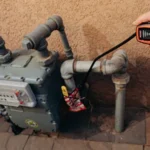
Start by turning off every water fixture in your home: faucets, showers, the dishwasher, the washing machine, the icemaker. Make sure no one flushes a toilet or runs anything while you’re doing this. Then go to your water meter, which is typically in a covered box near the curb or sidewalk in front of your property.
Most residential meters have a small triangle or dial called a leak indicator. With all fixtures off, watch it for 60 seconds. If it’s moving at all, water is flowing somewhere on your side of the meter line. That’s a leak. Even if your meter doesn’t have a visible leak indicator, write down the exact reading, wait 30 minutes without using any water, and check again. Any change in the reading confirms an active leak.
This matters especially in South Bay homes because many properties in Torrance, El Segundo, and Manhattan Beach sit on post-war slab foundations with supply lines running underneath the concrete. A leak in one of those lines can run continuously for weeks without producing any visible water inside or outside the home. The slab absorbs it, the soil disperses it, and the only evidence is the meter spinning and the bill climbing. Installing smart water monitors can help detect these hidden leaks before they cause major damage.
Sometimes homeowners first notice something feels off before they ever check the bill. A warm spot on the tile floor in the kitchen or hallway. The faint sound of water running when every fixture is off. A section of flooring that feels slightly soft or spongy. These are all signs that water is moving somewhere beneath the surface.
Acting quickly matters here. Southern California’s coastal humidity, particularly in neighborhoods closer to the water in Redondo Beach and Manhattan Beach, creates conditions where hidden moisture can lead to mold growth inside walls and under flooring surprisingly fast. And in slab construction, prolonged water exposure beneath the foundation can cause soil erosion and eventual settling that creates far more expensive structural problems than the plumbing repair itself.
If your meter confirms a leak, the next step is figuring out where it’s coming from. The sections below cover the most common sources in this region, starting with the one that tends to cause the biggest bill spikes.
Running Toilets, Dripping Fixtures, and the Leaks You Learn to Ignore
Not every unexplained water bill spike involves something dramatic beneath the slab. Sometimes the culprit is sitting right in front of you, making a sound you’ve simply stopped noticing.
Running toilet
A running toilet is one of the most common and underestimated sources of residential water waste. The faint hissing or trickling sound from a toilet that doesn’t fully shut off after flushing is so easy to tune out that many homeowners genuinely forget it’s there. But a faulty flapper valve or a worn fill valve keeps water cycling continuously from the tank into the bowl, and the volume adds up quickly over a full billing cycle. The EPA’s WaterSense program estimates that household leaks can account for nearly 10,000 gallons of water wasted per year in an average home, and toilets are frequently the largest single contributor.
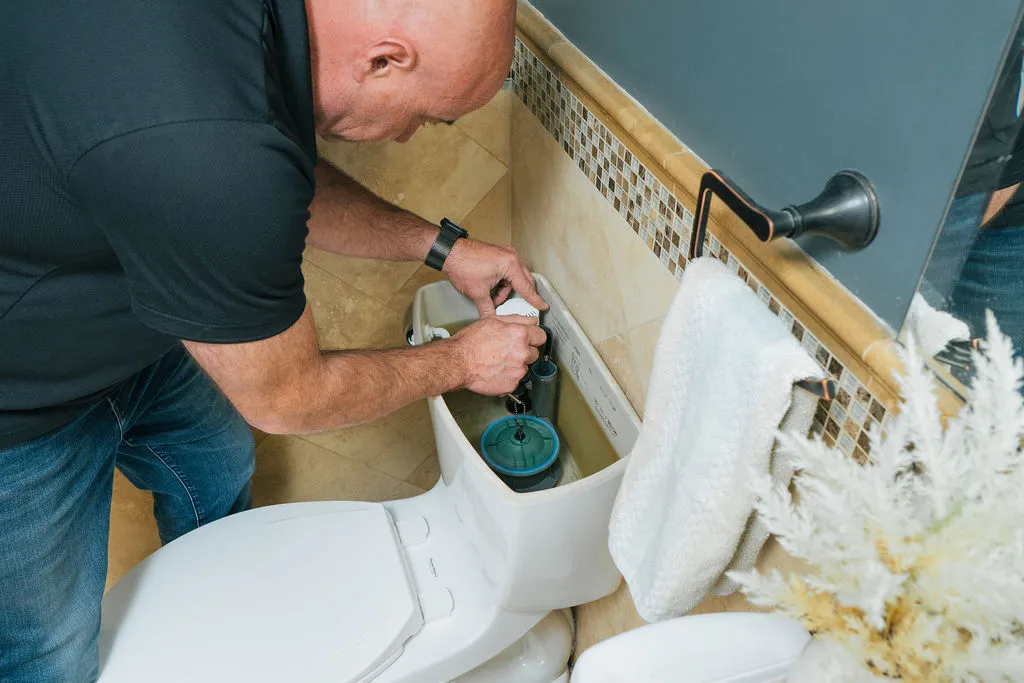
The fix is usually inexpensive, but the leak has to be found first. A simple test: put a few drops of food coloring in the toilet tank, wait 10 minutes without flushing, and check the bowl. If color appears in the bowl, the flapper isn’t sealing and water is leaking through constantly.
Outdoor Faucet
Outdoor irrigation is another significant source, and it’s particularly easy to miss in South Bay neighborhoods with established landscaping. Sprinkler systems in older Redondo Beach and Long Beach properties often run on timers overnight, which means a cracked lateral line, a stuck valve that won’t close, or a broken sprinkler head can leak for hours in the dark without anyone ever seeing it. Root intrusion from mature trees and shrubs is also common in these neighborhoods, gradually crushing or displacing older irrigation pipe. Scheduling professional drain cleaning services can help address root intrusion issues before they worsen.
Mineral Build Up
Southern California’s hard water plays a role here too. The mineral scaling that builds up inside pipes also accelerates wear on the washers, valve seats, and cartridges inside faucets and shower valves. A dripping kitchen faucet or a shower that never quite stops after you turn it off seems minor, but those drips compound into real water loss over a 30-day billing period. In areas with particularly hard water, these components often need replacement more frequently than manufacturers’ standard estimates suggest.
The practical approach is to do a full walk-through of your home before assuming the problem is something hidden. Check every toilet, run your hand under every faucet connection, look at the base of your water heater, and walk your irrigation system during a manual run cycle to watch for obvious breaks or overspray. You may find the answer before you ever need to call anyone.
Aging Galvanized Pipes and Corroded Water Lines Along the Coast
In many South Bay homes built before 1970, the original supply lines weren’t copper at all. They were galvanized steel, and a significant number of those pipes are still in service today in older sections of Hawthorne, Carson, and Torrance. If your home still has galvanized plumbing, it’s worth understanding what’s happening inside those pipes right now.
Galvanized steel corrodes from the inside out. Over decades, mineral deposits from Southern California’s hard water accumulate along the interior pipe wall, gradually restricting flow. Whole-home water filtration systems can reduce the mineral content that accelerates this corrosion. At the same time, the zinc coating that was supposed to protect the steel breaks down, and rust begins to develop at joints, threaded connections, and anywhere the pipe experiences stress. Pinhole leaks form at these weak points, often leaking into wall cavities or beneath floors where they can go undetected for extended periods.
Homeowners sometimes first notice reduced water pressure at fixtures before they ever notice a leak, because the internal scaling has narrowed the pipe diameter so significantly that flow is restricted. What they may not realize is that the same pipe losing pressure is also losing water somewhere along its run.
Coastal proximity adds another layer of deterioration for properties in Manhattan Beach, Hermosa Beach, and El Segundo. Salt air accelerates corrosion on any exposed metalwork: outdoor hose bibs, shut-off valves, irrigation connections, and pipe fittings at exterior walls. Homeowners in these areas sometimes attribute the moisture they see around an outdoor fitting to condensation from coastal air, when it’s actually a slow, steady leak from a corroded valve seat.
The challenge with galvanized systems is that partial repairs tend to create recurring problems. When a plumber replaces a corroded section of galvanized pipe, the repair increases pressure on the next weakest point in the system. It’s not uncommon for a homeowner to have the same section of wall opened up two or three times over a few years, each time fixing a new failure on a pipe that’s simply past its useful life throughout.
Whole-home repiping with modern copper or PEX eliminates this cycle. It’s a larger upfront investment, but for properties with chronic water loss and aging galvanized infrastructure, it typically becomes the more cost-effective path when you factor in the repeated repair costs, water waste, and potential damage from ongoing leaks.
Water Heater Issues That Quietly Drive Up Your Bill
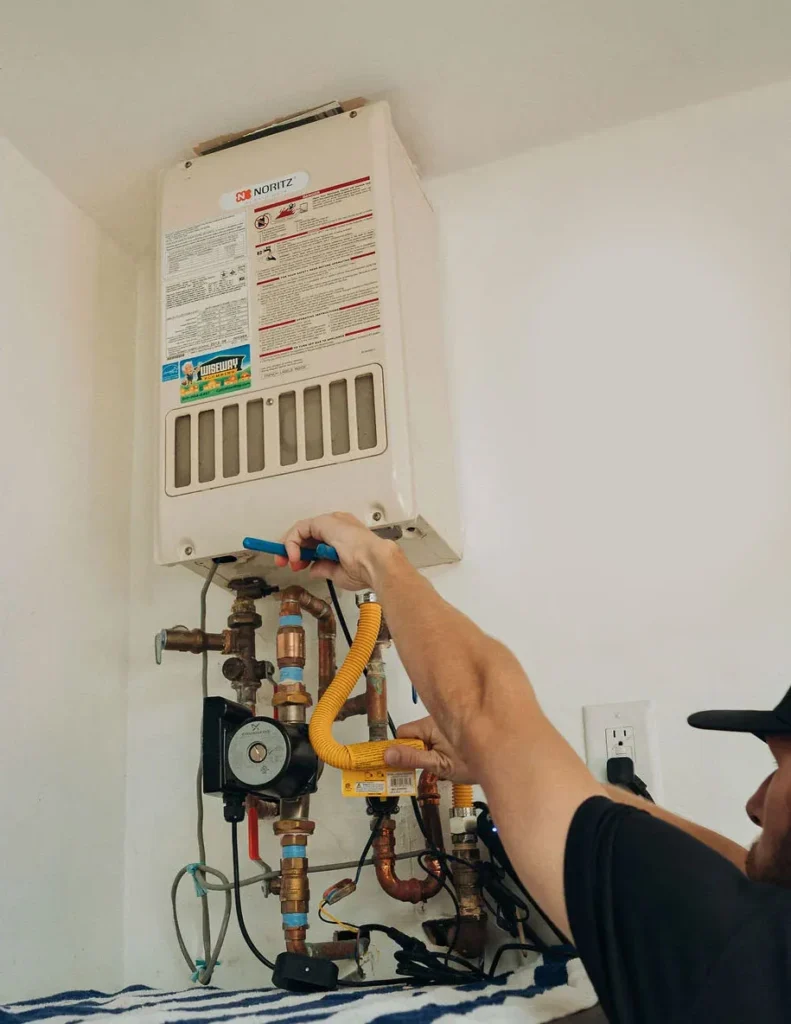
Your water heater is worth checking carefully when you’re investigating an unexplained bill spike, and not just for obvious leaks at the base of the tank. Knowing the signs your water heater is failing can help you catch problems before they significantly impact your water bill.
Tank water heaters have a component called a temperature and pressure relief valve, or T&P valve, designed to release water if pressure inside the tank gets too high. When this valve fails or begins to weep, it can discharge water continuously into the drain line without producing any visible puddle. The water simply flows down the drain, and the only evidence is usage on your meter. If your water heater is in a garage or utility closet where you don’t spend much time, this can go unnoticed for weeks.
Sediment buildup is a related issue that’s especially common in Southern California. The hard municipal water supplied throughout the South Bay region deposits calcium and magnesium inside the tank over time, accumulating at the bottom where the burner heats the water. A thick layer of sediment insulates the water from the heat source, forcing the unit to run longer cycles to reach the set temperature. This increases both gas usage and water usage if the unit is connected to a recirculation system. Upgrading to a high efficiency water heater can help reduce both energy and water waste.
Tankless water heaters have their own scaling problem. Mineral buildup inside the heat exchanger reduces efficiency and can cause the unit to demand more water flow to reach the set temperature. In severe cases, a scaled tankless unit may short-cycle or trigger error shutdowns that involve flushing water through the system. Regular descaling flushes, typically recommended annually in hard water areas, prevent this from becoming a significant efficiency and usage issue. Following a proper tankless water heater maintenance schedule is essential for South Bay homeowners.
Slow leaks at corroded supply connections on both tank and tankless units are also worth inspecting. In garages and utility closets, these leaks often develop gradually at threaded fittings or flexible connector joints, and the water evaporates or drains away without pooling visibly. Running your hand along the supply connections and checking for mineral deposits or staining around fittings can reveal a slow drip that’s adding up over the billing cycle.
Putting It All Together
A sudden water bill spike in Southern California almost always has a plumbing explanation. The good news is that it’s almost always fixable once you find the source. The longer it goes uninvestigated, the more water is wasted, the more damage accumulates, and the more expensive the eventual repair tends to become.
Start with the meter test. It takes five minutes and immediately tells you whether you have an active leak. Then walk through your home and check the obvious candidates: toilets, faucets, irrigation, and the area around your water heater. If you find the source, address it. If you don’t, that’s when professional leak detection becomes the right next step.
At WiseWay Plumbing, we’ve been working in South Bay homes for over 27 years. We understand the specific plumbing challenges that come with older slab construction, aging galvanized systems, hard water, and coastal conditions in communities across Torrance, Redondo Beach, Manhattan Beach, El Segundo, Hawthorne, Carson, and Long Beach. Our team uses acoustic and thermal detection equipment to locate hidden leaks without unnecessary demolition, and we focus on identifying root causes rather than just patching symptoms.
We offer a $0 service call with any plumbing repair, and we’re available 24/7 for emergency situations. If your water bill has spiked and you’re not sure why, don’t wait for the next billing cycle to confirm the problem is real. Schedule Service Now and let’s find out exactly what’s happening before it costs you more water, more money, and more damage than it needs to.
This is a common problem in South Bay neighborhoods, and it’s one we’ve helped hundreds of local homeowners resolve. You’re not alone in dealing with it, and you don’t have to figure it out by yourself.
Booking Online Is Easy!
More Expert Plumbing Advice




Slab Leaks: The Most Expensive Culprit Hiding Under South Bay Homes
If you’ve confirmed a leak through the meter test but can’t find any dripping faucets, running toilets, or wet spots anywhere in the house, there’s a strong chance you’re dealing with a slab leak. In South Bay communities, this is one of the most common explanations for sudden, dramatic water bill increases.
Here’s why this region is so vulnerable. Much of Torrance, Hawthorne, Carson, and El Segundo was developed between the 1940s and 1970s. The copper supply lines installed during that era were routed through or beneath concrete slab foundations, which was standard construction practice at the time. Those pipes are now anywhere from 50 to 80 years old, and they’ve spent decades in contact with Southern California’s mineral-heavy water, shifting soil, and the slight but continuous movement that comes with foundation settling over time.
The result is pinhole leaks. Southern California’s hard water, with its high calcium and magnesium content, creates a chemical interaction with copper that gradually pits the pipe wall from the inside. Addressing the root cause of mineral buildup through water softening and conditioning can help protect your pipes long-term. Soil conditions and minor foundation movement stress the pipe from the outside. Eventually, the pipe wall fails at its weakest point, and water starts escaping into the concrete or the soil beneath the slab.
The progression homeowners typically experience is telling. One month the bill is slightly higher than usual, maybe $30 or $40 more. It’s easy to attribute that to an extra load of laundry or a few extra showers. But the next month the bill jumps dramatically, because the corrosion that breached the pipe wall has now widened the opening. Slab leaks often worsen rapidly once they start, and a small pinhole can waste thousands of gallons before any visible sign appears inside the home.
By the time you notice dampness at a baseboard, a warm spot on the floor, or a faint musty smell near the foundation, the leak has usually been running for a while. In some cases, the first visible sign is a crack in the drywall or a section of tile that has begun to lift, caused by moisture pressure from below.
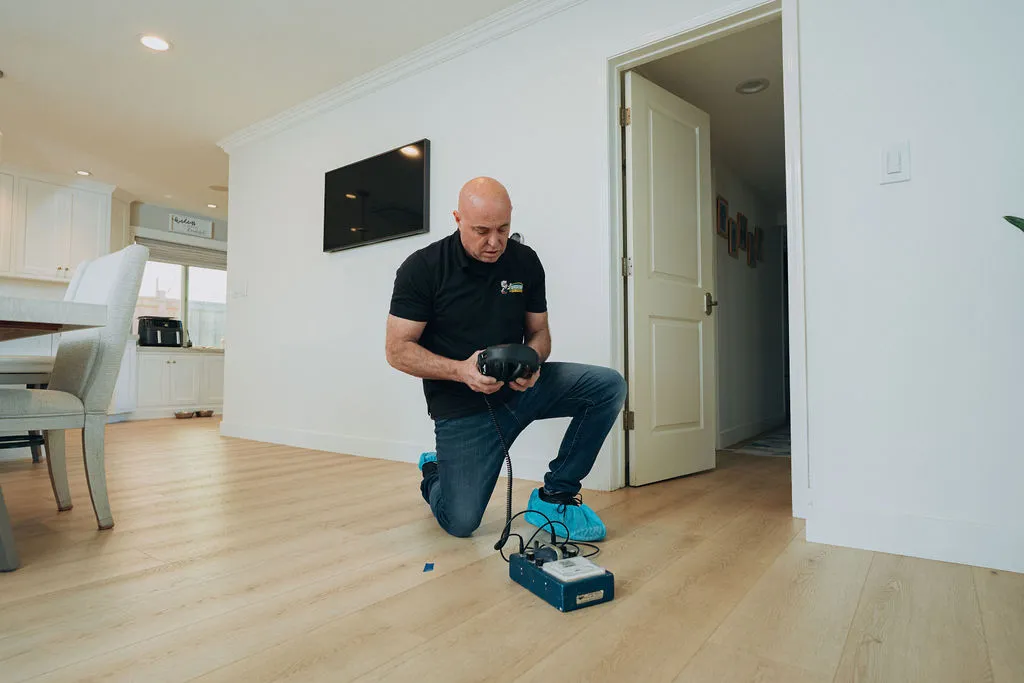
Professional leak detection is essential here. Acoustic listening devices can detect the sound of water escaping through a pipe beneath the slab. Thermal imaging cameras identify temperature differences in the floor surface that indicate where warm water is migrating. These tools allow a skilled plumber to pinpoint the leak location before any concrete is touched, which matters enormously because unnecessary jackhammering is expensive, disruptive, and damaging to the surrounding structure.
Once the leak is located, there’s a decision to be made. A single accessible leak on an otherwise sound pipe might justify a targeted spot repair. But in many older South Bay homes where the copper lines throughout the slab are all roughly the same age and condition, fixing one pinhole often means the next weakest point fails within a year or two. In those situations, full repiping with modern copper or PEX is frequently the more cost-effective long-term solution. It eliminates the recurring cycle of repairs and gives the home a fresh plumbing system with a predictable lifespan.

What Professional Leak Detection Actually Involves
If you’ve done the meter test and confirmed a leak, checked every visible fixture and found nothing obvious, and your bill spike is more than minor, it’s time to call a professional. Hidden leaks in slab foundations, wall cavities, or underground supply lines require specialized equipment to locate without causing unnecessary damage.
Professional leak detection isn’t guesswork. Acoustic listening devices amplify the sound of water escaping from a pressurized pipe, allowing a trained plumber to trace the leak to a specific location even beneath several inches of concrete. Thermal imaging cameras detect temperature differences at the floor or wall surface, identifying where warm water is migrating from a hot supply line leak. Static pressure testing isolates sections of the plumbing system to confirm where pressure loss is occurring, narrowing the search area before any physical investigation begins.
On slab foundations, these tools are especially critical. Jackhammering concrete to find a leak by guessing is expensive, disruptive, and often unnecessary. A plumber using proper detection equipment can identify the leak location with enough precision to make a targeted, minimal opening rather than tearing up a large section of flooring. For homeowners considering preventive upgrades during repairs, learning about tankless water heaters can be worthwhile since repiping often presents an ideal opportunity to upgrade your water heating system.
The other thing worth asking for from a professional is an explanation of why the leak happened, not just where it is. A plumber who identifies the root cause, whether that’s pipe age, soil conditions, improper past repairs, or mineral scaling, can recommend a solution that addresses the underlying problem rather than just patching the immediate failure. That distinction matters if you want to avoid the same situation repeating itself in 18 months.
(310) 731-1055Fixing Plumbing Problems in The South Bay
and the Surrounding Communities
- 90001
- 90002
- 90003
- 90004
- 90005
- 90006
- 90007
- 90008
- 90010
- 90011
- 90012
- 90013
- 90014
- 90015
- 90016
- 90017
- 90018
- 90019
- 90020
- 90021
- 90023
- 90024
- 90025
- 90026
- 90027
- 90028
- 90029
- 90031
- 90032
- 90033
- 90034
- 90035
- 90036
- 90037
- 90038
- 90039
- 90041
- 90042
- 90043
- 90044
- 90045
- 90046
- 90047
- 90048
- 90049
- 90056
- 90057
- 90058
- 90059
- 90061
- 90062
- 90063
- 90064
- 90065
- 90066
- 90067
- 90068
- 90069
- 90071
- 90073
- 90077
- 90079
- 90089
- 90094
- 90095
- 90205
- 90210
- 90212
- 90220
- 90221
- 90222
- 90230
- 90231
- 90232
- 90233
- 90245
- 90247
- 90248
- 90249
- 90251
- 90254
- 90260
- 90261
- 90266
- 90267
- 90272
- 90274
- 90275
- 90277
- 90278
- 90290
- 90291
- 90292
- 90293
- 90294
- 90295
- 90303
- 90304
- 90310
- 90401
- 90402
- 90403
- 90404
- 90405
- 90406
- 90407
- 90408
- 90409
- 90410
- 90411
- 90501
- 90502
- 90503
- 90504
- 90505
- 90506
- 90507
- 90508
- 90509
- 90510
- 90620
- 90621
- 90622
- 90623
- 90624
- 90630
- 90638
- 90650
- 90651
- 90652
- 90680
- 90701
- 90702
- 90703
- 90706
- 90707
- 90710
- 90711
- 90712
- 90713
- 90714
- 90715
- 90716
- 90717
- 90723
- 90731
- 90732
- 90740
- 90742
- 90743
- 90744
- 90745
- 90746
- 90747
- 90749
- 90801
- 90802
- 90803
- 90804
- 90805
- 90806
- 90807
- 90808
- 90809
- 90810
- 90813
- 90814
- 90815
- 90822
- 90831
- 90832
- 90833
- 90840
- 90842
- 90844
- 90846
- 90847
- 90848
- 90895
- 91040
- 91042
- 91214
- 91303
- 91304
- 91306
- 91307
- 91311
- 91316
- 91324
- 91325
- 91326
- 91330
- 91331
- 91335
- 91340
- 91342
- 91343
- 91344
- 91345
- 91352
- 91356
- 91364
- 91367
- 91401
- 91402
- 91403
- 91405
- 91406
- 91411
- 91423
- 91436
- 91504
- 91505
- 91601
- 91602
- 91604
- 91605
- 91606
- 91607
- 91608
- 92605
- 92615
- 92646
- 92647
- 92648
- 92649
- 92655
- 92683
- 92684
- 92685
- 92703
- 92708
- 92728
- 92801
- 92802
- 92803
- 92804
- 92805
- 92806
- 92807
- 92808
- 92809
- 92812
- 92814
- 92815
- 92816
- 92817
- 92825
- 92840
- 92841
- 92842
- 92843
- 92844
- 92845
- 92846
- 92899
Don’t see your ZIP code? Call us to ask about service in your area. We may still be able to help.
(310) 731-1055